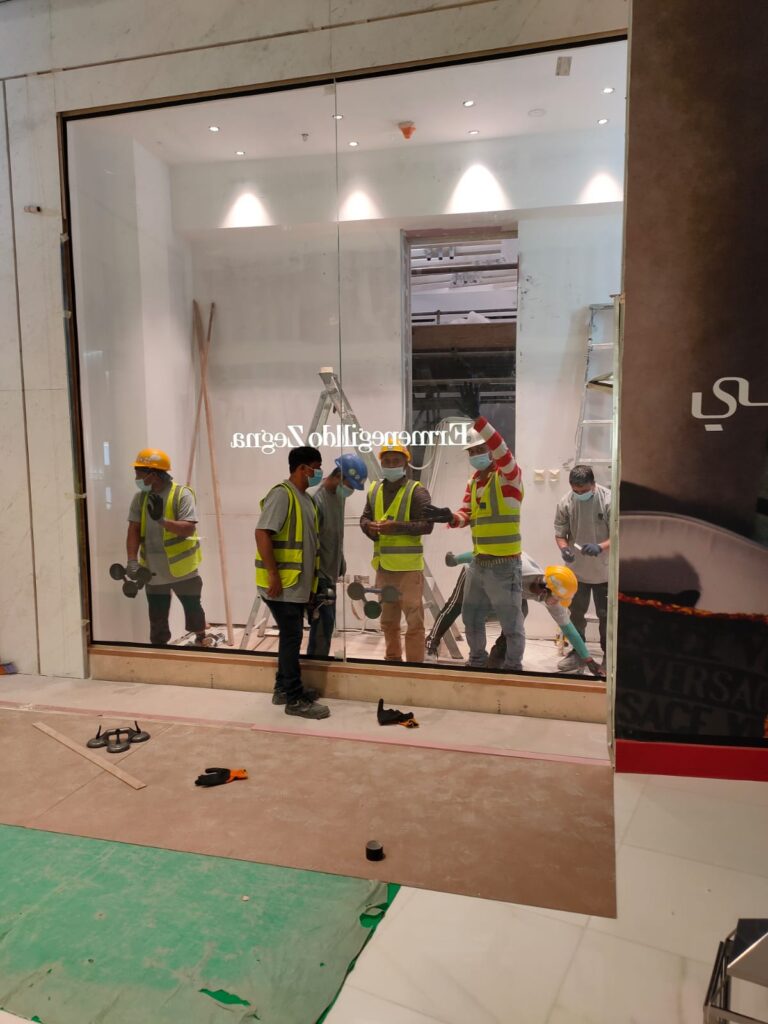
Glass partitions in Dubai have become the standard way to divide commercial and residential interiors without losing light, openness, or usable floor area. Whether you are fitting out an office in Business Bay, separating a meeting room inside a DIFC tower, or reorganising a villa in Arabian Ranches, a well-specified glass partition gives you separation and privacy while keeping the space bright and visually larger. This buyer’s guide explains the partition systems available in the UAE, the glass thicknesses and safety standards that apply, realistic installed costs, and how to choose a supplier you can trust with a frameless glass partition Dubai project.
Quick Answer
A glass partition in Dubai is an interior divider made from toughened (tempered) or laminated safety glass, supplied either frameless or with slim aluminium framing. Frameless systems use 10mm or 12mm tempered glass and minimal hardware for a clean, open look. Framed and double-glazed systems add acoustic performance for offices. Installed prices typically run from around AED 250 per square metre for simple framed partitions to AED 1,200 or more per square metre for double-glazed acoustic and operable walls. For an accurate figure you need a site measurement and a hardware specification, which is why a written quote always beats an online estimate.
What Are Frameless Glass Partitions?
A frameless glass partition is an interior wall made primarily of glass, held in place by floor and ceiling channels and discreet hardware rather than a visible perimeter frame. The glass does the structural work, so the result reads as a single clean plane rather than a series of framed panels. Door leaves, where needed, are usually glass too, hung on patch fittings or slim pivot hardware.
The appeal in the UAE is practical as much as visual. Dubai’s better office buildings and villas are built around natural light, and solid drywall partitions waste it. Glass keeps daylight moving through the floorplate, which matters in deep commercial layouts where only the perimeter has windows. It also makes small apartments and retail units feel larger, a real advantage in high-value-per-square-foot communities such as Downtown Dubai, JLT, and Dubai Marina.
Glass Partitions in Dubai: The Main Benefits
More natural light and bigger-feeling spaces
The single strongest reason clients choose glass is light transmission. A clear 10mm partition lets daylight reach interior rooms that a stud wall would leave dim, cutting reliance on artificial lighting during the day. In open-plan offices, this supports the kind of bright, transparent layout that tenants in Dubai’s grade-A towers expect.
Acoustic privacy without solid walls
Modern partitions do not force a trade-off between openness and quiet. A single-glazed 10–12mm partition gives a sound reduction in the region of 32–38 dB, which is enough for general office separation. Where confidentiality matters, such as boardrooms, clinics, and HR offices, a double-glazed system with laminated acoustic interlayers can reach 45 dB or higher. If sound control is the priority, pair your partition specification with a dedicated acoustic glass solution rather than relying on a standard single pane.
Suited to Dubai’s climate and fit-out standards
Interior partitions are not exposed to direct sun, so heat gain is rarely the concern it is with façade glazing. The local factors that matter more are fire and life-safety compliance, building-management fit-out rules, and the dust that settles quickly in the Dubai climate. Reputable suppliers specify glass and hardware that meet Dubai Civil Defence requirements for the building type and design layouts that pass landlord and authority approvals the first time.
Where Glass Partitions Work Best in Dubai
The same system rarely suits every space, so it helps to match the partition to the setting. In corporate offices across Business Bay, DIFC, and Sheikh Zayed Road, frameless and double-glazed partitions are used to carve meeting rooms, managing-director offices, and breakout zones out of open floorplates while keeping sightlines and daylight. The acoustic upgrade is almost always worth it for rooms where confidential conversations happen.
Retail and showroom fit-outs in malls and along the main avenues use glass partitions to separate stock rooms, fitting areas, and back offices without darkening the sales floor. Clinics and dental practices favour switchable or laminated partitions that combine hygiene-friendly surfaces with patient privacy. In villas and apartments across communities such as Dubai Hills, Jumeirah, and Palm Jumeirah, homeowners use glass to divide home offices, gyms, and kitchens from living areas, holding onto the open feel that buyers in Dubai pay a premium for. Hospitality projects, from restaurants to hotel function rooms, lean on operable glass walls that reconfigure space for different events through the day.
Knowing the use case up front shapes every later decision, from glass thickness to whether you need integrated blinds or smart film. It is the first thing an experienced supplier asks, because a showroom partition and a boardroom partition have very different priorities even when they look similar on a drawing.
Types of Glass Partition Systems
Frameless vs framed partitions
Frameless partitions use thick toughened glass with minimal top and bottom channels, giving the cleanest look and the most light. Framed systems wrap each panel in slim aluminium profiles, usually in silver, black, or a powder-coated finish. Framing adds rigidity, simplifies the integration of blinds and acoustic seals, and tends to cost less, which is why it remains popular for larger office build-outs.
Single-glazed vs double-glazed
A single-glazed partition is one pane of glass. A double-glazed partition uses two panes with a cavity between them, which sharply improves acoustic isolation and allows integrated blinds to sit inside the cavity, protected from dust. Double glazing roughly doubles the material and labour, so it is reserved for areas where privacy and quiet justify the spend.
Fixed, sliding, and operable walls
Fixed partitions are permanent dividers. Sliding glass systems let you open a room when needed, useful for flexible meeting spaces. Operable or movable walls fold or stack away entirely, turning two rooms into one for events and training sessions. Smart or switchable glass adds a privacy layer that turns the pane opaque at the flick of a switch, increasingly specified for clinic consultation rooms and executive offices in Dubai.
| System type | Typical glass | Best for | Acoustic rating (approx.) |
|---|---|---|---|
| Frameless single-glazed | 10–12mm tempered | Open offices, showrooms, retail | 32–38 dB |
| Framed single-glazed | 8–10mm tempered | Budget office fit-outs | 30–36 dB |
| Double-glazed acoustic | 2 panes, laminated | Boardrooms, clinics, HR | 40–48 dB |
| Sliding / operable | 10–12mm tempered | Flexible meeting and event rooms | Varies by seals |
| Switchable smart glass | Laminated with PDLC film | Privacy-on-demand spaces | 36–44 dB |
Glass Thickness, Safety Glass, and UAE Standards
Interior partitions in occupied buildings must use safety glass, not ordinary annealed glass. There are two recognised types. Toughened (tempered) glass is heat-treated so that it is several times stronger than standard glass and, if broken, shatters into small blunt granules instead of sharp shards. It is manufactured to standards such as EN 12150 and ANSI Z97.1. Laminated glass bonds two or more panes with an interlayer that holds the glass together if it cracks, which is why it is preferred where containment and acoustics matter; the relevant standard is EN 14449/EN 12543.
Thickness is chosen by panel height and span. As a working rule, 10mm toughened glass suits frameless partitions up to roughly 2.7m high, while taller panels and glass doors move to 12mm. Door leaves, fully glazed entrances, and any panel that could be walked into should be toughened or laminated as a matter of course. A competent supplier will reference Dubai Civil Defence life-safety guidance and the building’s own fit-out manual before confirming the specification, rather than offering a single thickness for every job.
If your project also involves glazed doors within the partition run, it is worth reviewing the options in our guide to frameless glass doors in Dubai so the hardware and glass match across the whole installation.
Glass Partition Cost in Dubai: A Realistic Price Guide
Pricing depends on the system, glass thickness, hardware quality, the number of doors, and site access. The figures below are indicative supplied-and-installed ranges for the Dubai market in 2026 and should be treated as a starting point, not a quotation. Premium hardware brands, switchable glass, and complex layouts sit at the top of each range.
| Partition type | Indicative installed cost (AED / m²) | Notes |
|---|---|---|
| Framed single-glazed partition | 250 – 400 | Most economical; good for general offices |
| Frameless 10–12mm tempered, clear | 400 – 650 | Clean look, strong light transmission |
| Double-glazed acoustic partition | 700 – 1,200 | Boardrooms, clinics, private offices |
| Sliding / operable glass wall | 1,000 – 2,500 | Track and seal quality drives the price |
| Switchable smart glass partition | 2,500 – 5,000+ | Privacy-on-demand; film and control gear add cost |
Two cost factors are easy to underestimate. The first is doors: every glazed door adds hardware, hinges or patch fittings, and often a lock or access-control cut-out. The second is the ceiling and floor condition, because uneven surfaces in older buildings need packing and trims that add labour. A site survey is the only way to price these accurately, and any glass partition Dubai supplier worth using will insist on one before issuing a firm number.
The Installation Process: What to Expect
- Site survey and measurement. An installer checks dimensions, ceiling and floor levels, and access, and confirms any building-management or authority requirements.
- Design and specification. You approve the glass type, thickness, framing or frameless detail, door positions, and finishes, usually with a drawing.
- Approvals. For commercial fit-outs, the layout is submitted for landlord and, where required, Dubai Civil Defence sign-off.
- Fabrication. Glass is cut, toughened or laminated, and edge-worked off site. This stage typically takes one to two weeks.
- Installation. Channels and hardware are fixed first, then glass is set and doors are hung and adjusted. Most office partition runs are completed in one to three days on site.
- Handover. The installer checks alignment, door swing, seals, and silicone joints, and cleans the glass before sign-off.
How to Choose a Glass Partition Supplier in Dubai
The Dubai market has a wide quality range, from one-person fit-out crews to established fabricators with their own workshops. A few checks separate the two. Ask whether the company toughens and laminates in house or outsources it, because in-house fabrication usually means better quality control and faster turnaround. Confirm the hardware brands they use and whether spares are available locally, since cheap imported fittings are the most common cause of doors dropping out of alignment within a year.
Ask to see completed projects in buildings similar to yours, and check that the company is comfortable handling landlord and Civil Defence approvals rather than leaving them to you. Finally, read the warranty carefully: a credible supplier stands behind both the glass and the hardware, and is reachable for adjustments after handover. The same diligence applies whether you are buying a partition, a shower glass enclosure, or a glass balustrade.
Cleaning and Maintenance
Glass partitions are low-maintenance but not no-maintenance, and Dubai’s fine dust makes regular cleaning worthwhile. A microfibre cloth with a mild, ammonia-free glass cleaner keeps panels clear; avoid abrasive pads, which scratch the surface and any coatings. Wipe hardware and tracks occasionally so sliding doors keep running smoothly, and check silicone joints once a year. If you specified anti-fingerprint or easy-clean coated glass, follow the supplier’s cleaning advice to avoid damaging the coating.
Frequently Asked Questions
How much does a glass partition cost in Dubai?
As a guide, framed single-glazed partitions start around AED 250 per square metre installed, frameless tempered partitions run roughly AED 400–650 per square metre, and double-glazed acoustic systems sit between AED 700 and AED 1,200. Doors, switchable glass, and complex layouts increase the figure, so a site survey is needed for an accurate quote.
What thickness of glass is used for partitions?
Most frameless partitions use 10mm or 12mm toughened glass. 10mm suits panels up to about 2.7m high, while taller panels and glass doors usually move to 12mm. Framed systems can use 8–10mm because the frame adds rigidity.
Are glass partitions soundproof?
No partition is fully soundproof, but a good one significantly reduces noise. Single-glazed partitions cut around 32–38 dB, while double-glazed acoustic systems with laminated glass can reach 45 dB or more, which is suitable for boardrooms and consultation rooms.
Do I need approvals to install a glass partition in Dubai?
Commercial fit-outs usually require landlord approval and, depending on the building and layout, Dubai Civil Defence sign-off for fire and life-safety. A competent supplier handles or guides these submissions. Residential interior partitions are generally simpler but should still use safety glass.
How long does installation take?
Fabrication typically takes one to two weeks after measurement and approval. On-site installation of a standard office partition run is usually completed in one to three days, depending on size and the number of doors.
Can glass partitions be made private?
Yes. Options include frosted or sandblasted glass, applied privacy film, integrated blinds inside double-glazed cavities, and switchable smart glass that turns opaque on demand. The right choice depends on how much privacy you need and your budget.
Are frameless glass partitions safe?
When made from toughened or laminated safety glass and installed correctly, they are very safe. Toughened glass breaks into small blunt pieces, and laminated glass holds together if cracked. Both meet recognised safety-glazing standards used in the UAE.
Get a Frameless Glass Partition Quote in Dubai
A glass partition is one of the most cost-effective ways to add structure, privacy, and a premium finish to a Dubai interior without closing it in. The difference between a good installation and a frustrating one comes down to correct glass specification, quality hardware, and an installer who handles approvals and measures properly before quoting. Glasser Technical Works LLC fabricates and installs frameless and framed glass partitions across Dubai and the wider UAE, from single office rooms to full commercial fit-outs, with safety glass, reliable hardware, and clean handover as standard. Share your layout or site dimensions and we will arrange a survey and a firm, itemised quote for your glass partition Dubai project.
Related reading: Office Glass Partitions in Dubai · Acoustic Glass Solutions · Glass Doors · Shower Glass Enclosures · Glass Railings & Balustrades.